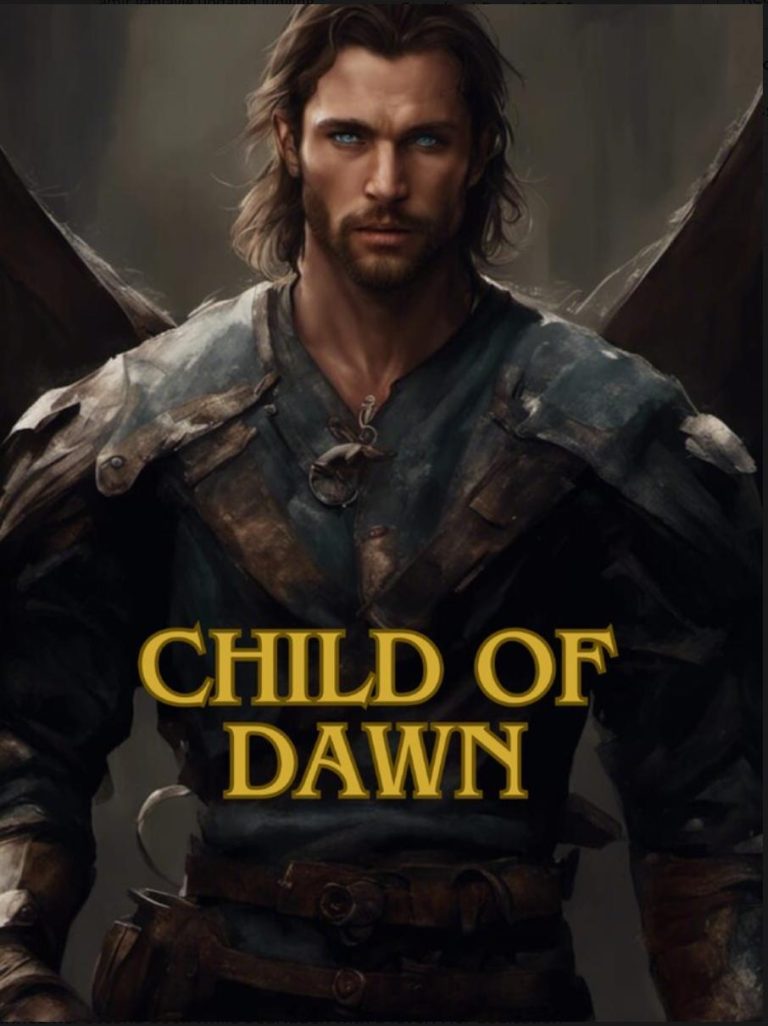
Winner of the Best Original Screenplay Award at the May edition of the Edinburgh Film Awards, Child of Dawn is an expansive romantic fantasy that builds its world around forbidden unions, inherited conflict and the possibility that those who exist between identities may be uniquely capable of reconciling them. Set across parallel human, elven and vampire realms, the screenplay combines the structure of a mythic quest with a love story between two characters who have been taught to regard themselves as incomplete, dangerous and unwanted.
The story opens with an act of violence that establishes the historical wound underlying the entire narrative. Ljosalfar, an elf, and Raefn, a vampire, have defied the laws of their respective peoples by falling in love, secretly marrying and producing a child. Their union represents proof that intimacy can exist beyond the boundaries imposed by ancestry, culture and law, but the elders interpret it as an offence against the natural order. The lovers are killed together, while their infant son is carried away and hidden in the human world.
This opening gives the screenplay the quality of an origin myth. The central conflict has not begun with the younger generation, but has been inherited from a society that has transformed difference into transgression. Love is treated not simply as a private act but as a political challenge to institutions built upon separation.
The narrative then introduces Anda, the daughter of a human father and an elven mother. Like the hidden child from the prologue, she exists between worlds. She has inherited magical abilities that she neither understands nor controls, and the people around her interpret those powers as evidence that she is cursed. Driven from her home for the protection of her family, Anda enters the forbidden forest and is led to Castle Skog, an ancient and decaying sanctuary inhabited by outsiders.
Among them are Vandre, an orphaned wanderer; Gammel, an elderly elf and magician; and Dagsbrún, the castle’s feared and mysterious master. Dagsbrún is eventually revealed to be the surviving child of Ljosalfar and Raefn, making him both elf and vampire, a descendant of light and darkness and the living consequence of the forbidden relationship that began the story.
The meeting between Anda and Dagsbrún provides the screenplay with its primary dramatic and romantic energy. Their early encounters are confrontational. Dagsbrún is possessive, volatile and accustomed to inspiring fear, while Anda refuses to submit to his authority. She challenges him even when doing so places her in danger, and their arguments establish them as emotional and thematic mirrors.
Both characters are divided by ancestry. Both have been rejected because they do not belong completely to a single world. Both possess abilities they fear, and both have internalized the prejudices directed against them. Anda considers herself cursed and powerless. Dagsbrún believes he is a monster without a heart or soul. Their connection develops because each recognizes in the other the conflict they cannot yet accept within themselves.
The screenplay makes effective use of the castle as a Gothic space. Castle Skog is part sanctuary, part prison and part repository of unresolved histories. Secret stairways, enchanted rooms, undead women, ancient manuscripts and hidden passages allow the location to function as more than a background. It reflects Dagsbrún himself: impressive, dangerous, isolated and filled with memories that have never been properly confronted.
The world surrounding the castle is equally imaginative. The singing Solv Pond, the treacherous kelpie Droime, the enchanted ruins that open passages between worlds and the vast political realms beyond the Vale give the screenplay considerable visual potential. The setting draws upon recognisable elements of European folklore, Gothic romance and high fantasy while arranging them around its own mythology of the Vale, the Gréasáin and the ancient laws governing elves and vampires.
One of the screenplay’s most engaging creations is Droime, the kelpie who initially attempts to drown Anda before becoming her familiar. His transformation from predator to companion reflects the larger argument of the story: appearances and inherited assumptions do not reveal the totality of a being. Anda does not destroy or dominate Droime. She forms a relationship with him, and the creature who first threatens her becomes one of her most loyal guides.
Gammel performs the traditional role of the wise mentor, but he is also personally implicated in the story’s history. He is not simply an observer who understands ancient prophecies; he is the man who rescued Dagsbrún as an infant after failing to save his parents. His efforts to train Anda and protect Dagsbrún are therefore acts of restitution. Through the younger characters, he hopes to repair a division that his own generation allowed to become catastrophic.
The mythology surrounding the Gréasáin gives the screenplay its broader stakes. The human and magical worlds are connected like strands of a web, and the continuing conflict between elves and vampires is weakening the entire structure. Hatred in one realm produces destruction in another. This makes the fantasy conflict an effective metaphor for the social consequences of division: violence cannot be isolated within the group that creates it, because damage to one part of a connected world eventually threatens everything.
Anda’s importance comes not from belonging to a supposedly pure bloodline but from embodying hybridity. She is initially ashamed of being half-human and half-elf, but this divided identity becomes the source of her power. She can move between cultures, question their assumptions and imagine possibilities unavailable to those who define themselves through purity.
Dagsbrún represents an even more extreme version of this condition. As the child of an elf and a vampire, he contains the two forces that have been at war for generations. He is feared not merely because of what he can do, but because his existence disproves the belief that the two peoples are naturally incapable of union. The hatred directed toward him is therefore ideological. His body is evidence against the laws upon which both societies have built their authority.
The romance between Anda and Dagsbrún develops through rescue, conflict, mistrust and gradually deepening recognition. The screenplay draws openly on the traditions of Gothic romance and the “beauty and the beast” narrative, but it complicates that pattern by ensuring that Anda is not simply a virtuous woman assigned to redeem a dangerous man. She has her own darkness, anger and fear. Her attraction to Dagsbrún comes partly from recognizing that he gives form to aspects of herself she has spent her life suppressing.
This idea is expressed powerfully when Anda tells him that she has not fallen in love with him because he is good, but because she sees her own darkness within him. The emotional logic of their relationship is not that love removes darkness. Instead, love makes it possible to reveal darkness without being entirely defined by it.
Dagsbrún’s reluctance to accept Anda’s love also provides an important counterpoint to his otherwise domineering behaviour. He fears that his vampiric nature will destroy her and insists that she must consciously invite him into an intimate relationship. This introduces the language of consent into a romance that begins within circumstances of captivity and unequal power.
Nevertheless, the screenplay would benefit from further refinement of this aspect. Dagsbrún initially imprisons Anda, physically restrains her and repeatedly describes her in possessive terms. Although the script later emphasizes equality and choice, some transitions between coercion and romance occur quickly. A future draft could strengthen Anda’s agency by more clearly marking the moment when she becomes free to leave Castle Skog and consciously decides to remain. This would make the romantic transformation more emotionally convincing and prevent the early captivity from being interpreted as merely a stage in the courtship.
The screenplay’s political world expands considerably when Anda, Dagsbrún, Vandre and Droime cross into the elven kingdom. The court of Rioghail and Bearla presents a society that is outwardly refined but inwardly corrupted by vanity, hierarchy and prejudice. Rioghail is particularly effective as an antagonist because he initially appears gracious and reasonable. His polished behaviour contrasts with Dagsbrún’s visible aggression, allowing the screenplay to explore the difference between appearing civilized and acting morally.
Rioghail desires Anda because he believes her power can strengthen his authority. His attraction is therefore inseparable from possession and political ambition. Dagsbrún may appear monstrous, but Rioghail’s elegant exterior conceals a more calculated form of violence. This contrast supports one of the screenplay’s recurring ideas: the true monster is not always the creature with wings, fangs or supernatural powers.
Bearla is similarly motivated by wounded pride and an old rejection. Her history with Dagsbrún gives her hostility personal weight, although her character is initially presented in a highly antagonistic manner. The later decision to name her queen offers an unexpected gesture of reconciliation, but this change occurs rapidly. A more gradual demonstration of Bearla’s political abilities, vulnerability or capacity for transformation would make her final position feel more fully earned.
Anda’s encounter with the Cleite Tree is one of the screenplay’s clearest statements of its moral vision. She is chosen not because she considers herself powerful, but because she lacks the arrogance of those who seek power for themselves. Her sensitivity, insecurity and humility—qualities she has regarded as weaknesses—become evidence of her worthiness.
The scene suggests that leadership does not arise from domination but from service, empathy and the ability to remain open to others. This argument is later repeated when Anda declares that the measure of a person lies not in the ability to conquer and reign, but in the capacity to love and serve.
The quest for Waymaker moves the screenplay into a more traditional heroic structure. Anda must enter the vampire lands, survive a tar pit and retrieve the weapon capable of symbolically uniting the two kingdoms. The test is both physical and psychological. She cannot succeed by relying entirely on Dagsbrún, Gammel or prophecy. She must claim the magic that has always existed within her.
Her movement through the tar is an effective visualization of self-belief. Reality changes when she enters the interior space of her own mind, transforming an impossible landscape into one she can navigate. The sword does not simply grant power; reaching it proves that Anda has stopped regarding herself as a passive victim of destiny.
The screenplay also understands that the recovery of a weapon cannot, by itself, create peace. Waymaker functions symbolically, but Anda’s real power lies in the relationships she has formed and the authority she has earned through sacrifice. She unites elves and vampires not by defeating one race on behalf of the other, but by rejecting the logic that either side must dominate.
The final battle at the Cleite Tree brings the story’s emotional and political conflicts together. Rioghail and Wampyr, leaders of the opposing kingdoms, die as consequences of the struggle they have helped perpetuate. Anda’s act of driving Waymaker into the tree produces not destruction but renewal. Purple fire spreads through the garden, restoring life and signalling that the old order can be transformed.
The image of nature blooming while Anda believes Dagsbrún has died is one of the script’s strongest dramatic contrasts. Public salvation and personal grief occur simultaneously. The world is restored at the moment her own emotional world appears to collapse.
Dagsbrún’s revival through the Gréasáin reinforces the screenplay’s belief that individual lives and collective structures are interconnected. He is saved not by vampiric immortality alone, but by the same bond that has restored balance between the realms. Love, in this mythology, is not simply romantic emotion. It is a force capable of reconnecting what violence has divided.
The final political settlement is generous in intention. Anda does not claim either throne for herself. Instead, she recognizes Bearla as the heir to the elven kingdom and Dagsbrún as the appropriate ruler of the vampires. Her refusal to transform heroic achievement into personal rule distinguishes her from the antagonists, who seek control.
Dagsbrún’s title as the “Child of Dawn” effectively resolves the screenplay’s central symbolism. He is neither a child of darkness nor entirely a child of light. Dawn is the meeting point between the two, a transitional state in which opposites coexist. The title therefore describes not only Dagsbrún but the new world the characters are attempting to create.
At 130 pages, the screenplay is ambitious in both scale and length. Its extensive mythology, multiple kingdoms, magical creatures, political conflicts and romantic development suggest the scope of an epic fantasy production. However, the script would benefit from some structural tightening. Several scenes repeat explanations concerning the prophecy, the Gréasáin, the forbindelse and the ancient conflict. Consolidating portions of this exposition would make the narrative move more confidently and allow the world-building to emerge increasingly through action.
The first half, centred on Castle Skog, contains strong atmosphere and character interaction but occasionally delays the larger quest. Some encounters, including the episodes involving the undead women and repeated rescues of Anda, could be condensed or more directly connected to her development as a magical protagonist.
The screenplay would also benefit from a careful line edit. There are recurring typographical errors, inconsistent character-name spellings and occasional formatting or grammatical problems. These do not undermine the imaginative strength of the story, but correcting them would make the script read more professionally and help clarify some complex action passages.
The dialogue has an appropriately elevated and storybook quality, especially in scenes involving prophecy, ancient law and forbidden love. At times, however, characters explain their emotions and the screenplay’s themes at considerable length. Allowing certain gestures, visual motifs and silences to carry more of this meaning would create greater variation in the emotional rhythm.
Anda remains the most important reason the screenplay succeeds. She begins as someone defined by other people’s fear and ends as a figure capable of redefining two civilizations. Her journey is not simply from weakness to strength. It is from self-rejection to self-recognition. She does not become powerful by eliminating the conflicting parts of her identity, but by accepting that those parts belong together.
Child of Dawn is an imaginative and emotionally sincere fantasy screenplay with a strong central metaphor. Its world is threatened by cultures obsessed with purity, inherited law and historical resentment. Its heroes are those who cannot be contained within the categories that sustain that conflict.
The script proposes that peace does not come from erasing difference or forcing one group to submit to another. It comes through connection, humility and the recognition that identity can be multiple without being incomplete. Anda and Dagsbrún do not save their worlds despite being divided between races. They save them because they understand what it means to live between worlds.
With its detailed mythology, Gothic atmosphere, magical creatures, large-scale quest and passionate central romance, Child of Dawn is a deserving winner of the Best Original Screenplay Award at the May edition of the Edinburgh Film Awards. It offers the foundations of a visually rich fantasy film and, potentially, a larger cinematic world, while grounding its spectacle in an enduring idea: those whom society treats as fragments may be the only ones capable of making a broken world whole.